In a message from Pastor Steve Babbitt, Sermon opens with prayer and a cultural-intro framing of political anxiety, diagnoses the heart issues (fear, pride, unbelief) undergirded by Psalm 2 and God’s sovereignty, then offers three Scripture-shaped practices (first allegiance, wide-angle intercession, courage over comeuppance). It adds a pastoral caution, proclaims gospel grace for failures, leads into communion as saving and sustaining grace, and invites concrete congregational prayer and respon
Acts 4:12 — “Salvation is found in no one else…”
Sermon Summary
Sermon opens with prayer and a cultural-intro framing of political anxiety, diagnoses the heart issues (fear, pride, unbelief) undergirded by Psalm 2 and God’s sovereignty, then offers three Scripture-shaped practices (first allegiance, wide-angle intercession, courage over comeuppance). It adds a pastoral caution, proclaims gospel grace for failures, leads into communion as saving and sustaining grace, and invites concrete congregational prayer and response, concluding with hope beyond headlines and closing prayer.
Full Sermon
#On Earth and in Heaven, Week 3 — Pray, Don’t Prey: Acts 4:5–31
Main Point
Pray for leaders, not just allies.
Please stand if you are able for the reading of God’s word.
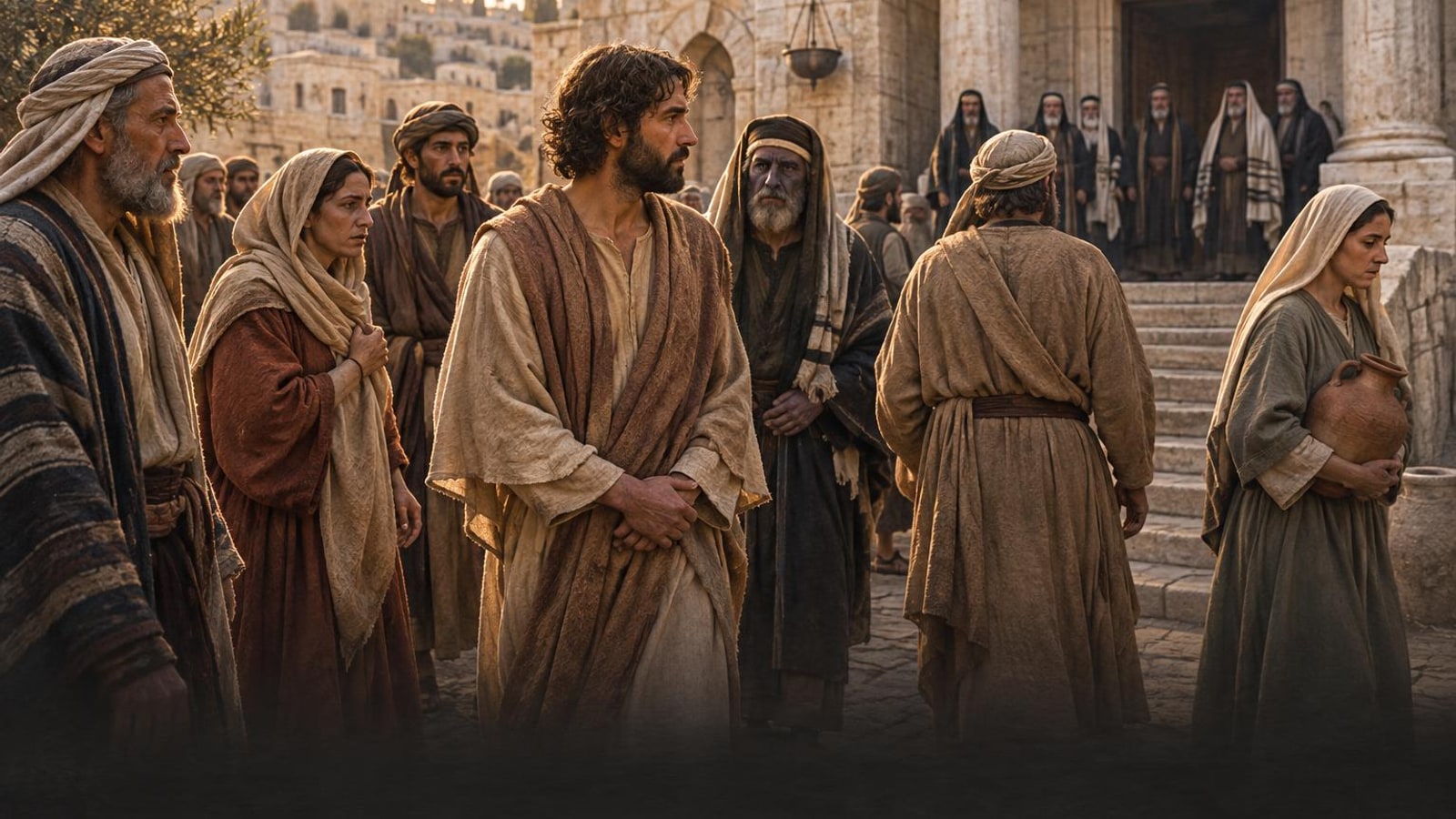
5 The next day the rulers, the elders and the teachers of the law met in Jerusalem. 6 Annas the high priest was there, and so were Caiaphas, John, Alexander and others of the high priest’s family. 7 They had Peter and John brought before them and began to question them: “By what power or what name did you do this?”
8 Then Peter, filled with the Holy Spirit, said to them: “Rulers and elders of the people! 9 If we are being called to account today for an act of kindness shown to a man who was lame and are being asked how he was healed, 10 then know this, you and all the people of Israel: It is by the name of Jesus Christ of Nazareth, whom you crucified but whom God raised from the dead, that this man stands before you healed. 11 Jesus is “‘the stone you builders rejected, which has become the cornerstone.’[a] 12 Salvation is found in no one else, for there is no other name under heaven given to mankind by which we must be saved.”
13 When they saw the courage of Peter and John and realized that they were unschooled, ordinary men, they were astonished and they took note that these men had been with Jesus. 14 But since they could see the man who had been healed standing there with them, there was nothing they could say. 15 So they ordered them to withdraw from the Sanhedrin and then conferred together. 16 “What are we going to do with these men?” they asked. “Everyone living in Jerusalem knows they have performed a notable sign, and we cannot deny it. 17 But to stop this thing from spreading any further among the people, we must warn them to speak no longer to anyone in this name.”
18 Then they called them in again and commanded them not to speak or teach at all in the name of Jesus. 19 But Peter and John replied, “Which is right in God’s eyes: to listen to you, or to him? You be the judges! 20 As for us, we cannot help speaking about what we have seen and heard.”
21 After further threats they let them go. They could not decide how to punish them, because all the people were praising God for what had happened. 22 For the man who was miraculously healed was over forty years old.
—--- 23 On their release, Peter and John went back to their own people and reported all that the chief priests and the elders had said to them. 24 When they heard this, they raised their voices together in prayer to God. “Sovereign Lord,” they said, “you made the heavens and the earth and the sea, and everything in them. 25 You spoke by the Holy Spirit through the mouth of your servant, our father David: “‘Why do the nations rage and the peoples plot in vain?
26 The kings of the earth rise up and the rulers band together against the Lord and against his anointed one 27 Indeed Herod and Pontius Pilate met together with the Gentiles and the people of Israel in this city to conspire against your holy servant Jesus, whom you anointed. 28 They did what your power and will had decided beforehand should happen. 29 Now, Lord, consider their threats and enable your servants to speak your word with great boldness. 30 Stretch out your hand to heal and perform signs and wonders through the name of your holy servant Jesus.”
31 After they prayed, the place where they were meeting was shaken. And they were all filled with the Holy Spirit and spoke the word of God boldly.
This is the word of the Lord. Thanks be to God.
##Opening Prayer: Sovereign Lord, who made the heavens and the earth and the sea and everything in them, open our hearts. Correct our assumptions. Help us hear your word instead of what we want it to say. Make us receptive to Jesus. Give us courage where we are afraid, and charity where we are angry. Help me to get out of your way today Lord, so that we hear, not my words, but YOUR words, the words we need to hear. In Christ’s name, amen.
You may be seated.
Main Point
Pray for leaders, not just allies.
##Scripture Summary: Peter and John have healed a man in Jesus’ name. Hauled before the Sanhedrin, they testify boldly that the risen Jesus—“the stone you builders rejected”—is now the cornerstone and that “salvation is found in no one else.” The council, threatened but unable to deny the miracle, commands them to stop speaking in Jesus’ name. Peter and John respectfully refuse: they must obey God rather than humans. After more threats, they’re released. The church gathers and prays—not for revenge, not even for safety—but with Psalm 2 on their lips. They address God as Sovereign Creator, remember how Herod, Pilate, and others did exactly what God’s hand had decided beforehand in Jesus’ death and resurrection, and they ask for one central gift: “enable your servants to speak your word with great boldness.” God answers—the place is shaken, they’re filled with the Holy Spirit, and they speak the word of God with boldness.
##Introduction: When Headlines Hijack Our Hearts
Maybe you know the feeling: a late-night scroll, a heated comment thread, a headline that spikes your blood pressure. Your prayers start to sound like campaign ads—urgent for “our” side, contemptuous of “their” side. You can feel it in your shoulders. You can hear it in your tone.
What if our first response to political anxiety wasn’t to sharpen our insults but to strengthen our prayers for those with whom we disagree? Acts 4 shows us how.
Here’s the claim I want to live with today: Jesus calls his followers to pray for all leaders, not just allies.
##What’s Going Wrong—And Why
In our present cultural context, we are encouraged to meet hostility with more hostility. We pray for our team to win and for “the other side” to lose. Fear and contempt creep into even our prayers. Our witness shrinks. Our joy thins. We take on the fool’s errand of attempting to defeat darkness with more darkness.
Scripture names what’s underneath such futile and feeble faith. Often it’s fear—especially fear of people. “Fear of man will prove to be a snare, but whoever trusts in the Lord is kept safe” (Proverbs 29:25).
We get snared by the pursuit of approval, the objectification of outcomes, the noise of half-baked headlines. And of course pride joins in—we need to be right, to come out on top. And unbelief slips quietly under both—we forget that God is actually sovereign over rulers and events.
Acts 4 won’t let us forget. The church prays Psalm 2: “Why do the nations conspire and the peoples plot in vain? The kings of the earth rise up… against the Lord and against his Anointed” (Psalm 2:1–2).
Rulers rage; God still reigns. They even say of Jesus’ death, “they did what your power and will had decided beforehand should happen” (Acts 4:28). The harassed and hunted saints revealed through their prayer that they understood the true score: human authority is real—but bounded. Our anxiety grows, and our faith shrivels, when we forget that.
When it comes to dealing with political division, the problem is not that we care about our country too much. The problem is that we care for our countrymen not enough. The problem is when fear, pride, and unbelief drive us to prey on opponents instead of to pray for one another, and our leaders. Political obsession has replaced prayerful intercession in the church, and we are the weaker for it. Outrage has been mistaken for courage. As the temperature in our rhetoric has gone up, the light of our witness has gone far, far down.
If that’s the drift, how do we live differently? What does a Jesus-shaped response look like next time the news cycle spikes your blood pressure?
I’d like to propose three ways forward.
##Three Ways Forward
FIRST, we must choose allegiance to God over pressure from authorities. SECOND, we must pray for those in authority. And THIRD, we must ask God to teach us Gentle Boldness. These are not techniques to control God. Not formulas to guarantee comfort. But practices that tune our hearts to God’s way revealed in Acts 4.
###FIRST, we must choose allegiance to God over pressure from authorities Peter and John stand before the most powerful council in their world. The command is crystal clear: stop speaking in Jesus’ name. Their answer is just as clear: “Which is right in God’s eyes: to listen to you, or to him? You be the judges! As for us, we cannot help speaking about what we have seen and heard.”
We must honor God above all human authorities when they conflict. That’s the posture.
Notice, the disciples are not rude. They don’t mock. They don’t call for chaos. They simply refuse a command that would silence obedience to God.
What does that look like for us?
In your workplace, if asked to falsify a report, you decline respectfully—and tell the truth anyway. If pressure mounts to hide your faith, you keep doing excellent work and speak of Jesus with humility when asked, even if it costs you.
In civic life, you submit to laws and honor offices as far as conscience allows—until a command would require you to disobey Christ. Then you practice courteous, courageous noncompliance.
This is not license for rebellion whenever we dislike a policy. Scripture calls us to “submit… to the governing authorities” (Romans 13) and to “show proper respect to everyone” (1 Peter 2:17). Acts 4 clarifies the limit: when human commands directly forbid obedience to God, we obey God.
###SECOND, we must pray for those in authority.
Let’s call this “Wide‑Angle Intercession”
In 1 Timothy 2:1–4, Paul writes: “I urge, then, first of all, that petitions, prayers, intercession and thanksgiving be made for all people— for kings and all those in authority, that we may live peaceful and quiet lives in all godliness and holiness. This is good, and pleases God our Savior, who wants all people to be saved…”
Pray for those in authority—especially those you didn’t choose. That widens our hearts beyond our tribe. It lowers the temperature inside us. It also aligns our prayers with the mission of God: peaceful space for godly life and the advance of the gospel.
What does this look like this week? Make a simple, steady list: local, state, and national leaders—from multiple parties. School board members. City council. Governor. Congress. President. Judges. Police and fire chiefs. Agency heads.
Pray by name. Pray for wisdom, justice, humility, and restraint. Pray for protection from corruption and courage to do what is right. Pray they would steward their office for the common good.
And include thanksgiving. Scripture says “intercession and thanksgiving.” Thank God for any evidence, any toehold of wise leadership, for public servants who work quietly for the common good, for ordinary mercies we overlook. Remember that we are neighbors, not enemies, and that each public servant, from the dog catcher to Caesar, is still a child of God in need of His grace.
And pray for their salvation. Paul ties these prayers to God’s desire that “all people be saved and… come to a knowledge of the truth.” Pray not just for political outcomes, but for hearts—ours and theirs.
###THIRD, we must ask God to teach us Gentle Boldness.
There is a difference between the Spirit’s way of speaking with courage and the fleshy alternative of seeking comeuppance.
Listen to the church’s request in Acts 4:29-31: “Now, Lord, consider their threats and enable your servants to speak your word with great boldness. Stretch out your hand to heal and perform signs and wonders through the name of your holy servant Jesus.” After they prayed, “the place where they were meeting was shaken. And they were all filled with the Holy Spirit and spoke the word of God boldly.”
Ask God for boldness to speak about Jesus rather than roiling for revenge on opponents. Notice what the believers didn’t ask: not for lightning on the Sanhedrin, not even for their own safety. They asked for courage to keep witnessing—and for God to keep confirming the word through Jesus’ name.
How can we practice this? Before a hard meeting, a classroom debate, or a tense community forum, pray, “Lord, consider the climate and give me courage to speak your word with clarity and kindness.” When you feel pushed to use the impish implements of sarcasm or payback, pause and pray, “Spirit, fill me again. Make me bold and gentle at the same time.”
When you see suffering or injustice, ask not only for change but for a chance to bear witness to Jesus in HOW you speak and act.
Boldness in Acts is not trumped-up bravado. It’s a Spirit-given clarity and courage grounded in God’s sovereignty. And God delights to give it to those who ask.
So, FIRST, we must choose allegiance to God over pressure from authorities. SECOND, we must pray for those in authority. And THIRD, we must ask God to teach us Gentle Boldness.
##Good News for People Who Already Blew It
Now, what about those of us who have already failed? If we are honest before God today, I think it is safe to say that we have all nursed contempt instead of nurturing intercession. We’ve all remained silent when we should have spoken, and loud when we should have listened. We’ve all placed our trust in horses and chariots—polls and pundits—instead of the Lord.
Here is grace: the very prayer in Acts 4 reminds us that God used the worst misuse of authority—the collusion of Herod, Pilate, the Gentiles, and the leaders of Israel—to accomplish our salvation.
Acts 4:28 says, “They did what your power and will had decided beforehand should happen.” At the cross, Jesus bore our sins of contempt, cowardice, and prayerlessness. He rose and poured out the Holy Spirit on people who had denied him and deserted him. And what did he do with those failures? He filled them afresh and sent them out again.
So, as we prepare to receive grace after grace this morning at the Lord’s table, bring your past to him. Confess where contempt has replaced prayer… And then — receive forgiveness. Ask for a fresh filling of the Spirit. The same Jesus who forgave his enemies from the cross forgives us—and teaches us to pray for our enemies even today.
Communion
Saved and Sustained by Grace
We come to the Table, not because we have earned the right, but because Jesus did what we could not do.
The cup—saving grace. This is the blood of Christ, shed for the forgiveness of sins. Receive forgiveness for the sins we have named today: contempt, fear, prayerlessness, and all the rest. You are not saved by your political wisdom or your civic effort. You are saved by the blood of the Lamb.
The bread—sustaining grace. This is the body of Christ, the life of the risen Lord given to strengthen you for the week ahead. You do not go back into a complex world on your own strength. Christ himself feeds you for allegiance, intercession, and courage. We come not as partisans but as disciples; not to prey on enemies, but to pray for all.
If you are not yet trusting Jesus, consider this an invitation from him. If you are in Christ, come with empty hands. Receive what he loves to give.
##A Concrete Invitation
Before we come, let’s practice what we’ve heard. In quiet, name before God one leader you admire and one leader you distrust. Pray for both by name—wisdom, justice, humility, courage, salvation. Ask the Spirit for boldness where you’ve been afraid, and for gentleness where you’ve been angry.
But above all, come.
##Hope Beyond the Headlines Governments can constrain our circumstances; they cannot overthrow God’s purposes. Psalm 2 says the nations rage, but the Lord installs his King. Hebrews says we are receiving “a kingdom that cannot be shaken.” Our citizenship is in heaven. One day, every knee will bow, every tear will be wiped away, and Christ will make all things new. Until then, we are strangers here—but we are not spectators. Our allegiance is eternal; our assignment is local. Pray, don’t prey.
And now, let us pray.
Sovereign Lord, you rule over rulers and write straight with crooked lines. We confess our fear and our pride, our contempt and our prayerlessness. Forgive us through the blood of Jesus. Fill us afresh with your Holy Spirit. Teach us to honor you above all, to pray for those in authority, and to ask for courage, not revenge. Make us a people whose peace cannot be stolen and whose witness cannot be silenced. Strengthen us at your Table—save us by the cup, sustain us by the bread—and send us out to love our neighbors and speak of Jesus. We receive your unshakable kingdom with grateful hearts. Come quickly, Lord Jesus. In the name of the Father, and of the son, and of the Holy Spirit, Amen.
This Week’s Bulletin
Follow along with the message outline and Pretty Good Questions.
Reflection and Discussion Questions
- Have you ever been in trouble for trying to do something good? What happened?
- Read Acts 4.29. What is boldness? How is it different from courage? What might happen if, each morning, you prayed for the Holy Spirit’s help to speak God’s word with boldness throughout the day? Are you willing to pray that tomorrow morning? Why?
- Are there coworkers, family, or friends where subtle pressure tempts you to stay silent about your convictions? What would it look like for you to pray for courage and boldness this week rather than praying to avoid uncomfortable people and situations?
- Where are you feeling pressure to listen to people rather than to God, and what would obedience look like this week?
- Name one leader you admire and one you distrust—how will you pray for both by name, and what will you ask God to give them?
- Before your next tense conversation, how could you pray Acts 4:29 and respond with both boldness and kindness?
- Read Acts 10. In your Bible dictionary (or Google) look up: Annas, Boldness, Caiaphas, Cornerstone, Name, Salvation, Sanhedrin, Sovereign Lord. Then read Acts 4.5-31 again.
- What is the story behind your name? Do you believe your name has helped you in life? Held you back? Neither?
- What does it mean to be “saved”? Is salvation more belief, feeling, or behavior? What are we saved from? What are we saved for?
- Have you ever disobeyed the government or broken a law in order to represent Jesus and his kingdom? How did you decide to do that? What were the negative consequences? What were the benefits?
- Have you ever seen or read about a Christian leader who was jailed and put on trial for their faith and ministry? How is their story similar to today’s passage? How is it different?
- Have you ever questioned another Christian’s faith or practice of their faith? What made you question them? Did their response change your opinion about their faith or practice of their faith? Why or why not?